
Best Wine Country Honeymoon Suites America: Detailed Property Audit
Evaluating luxury accommodations across American viticultural areas demands understanding regional agriculture, land-use zoning, and hospitality operations. Hotel operators often market accommodations as vineyard suites when rooms merely border production facilities or public tasting rooms. True agricultural luxury requires direct spatial buffers, uninterrupted views over manicured vines, and isolation from processing noise. Harvest machinery, early morning spraying schedules, and visitor traffic frequently disrupt guest privacy across poorly planned estates.
Complexities of Domestic Wine Regions
Domestic viticultural regions present contrasting topographies, microclimates, and architectural traditions. Northern California valleys, Oregon coastal hills, Washington river gorges, and Virginia rolling pastures feature distinct spatial layouts and agricultural cycles. Strict agricultural preserve legislation limits new commercial construction across prime growing soils. Consequently, top-tier accommodations operate under tight supply constraints, driving high rate surges during harvest months.
Scope of the Analytical Model
This reference provides a structured framework for evaluating, comparing, and reserving high-end domestic wine country suites. Analyzing estate topography, inventory naming protocols, agricultural schedules, and financial trade-offs reveals core selection criteria. The structured sections below establish a systematic approach for assessing accommodations across major domestic viticultural corridors. This analytical method ensures allocated capital secures genuine privacy, acoustic comfort, and environmental quality.
Understanding “Best Wine Country Honeymoon Suites America”
Deconstructing Agricultural Marketing Classifications
Assessing the best beachfront honeymoon suites united states or evaluating the best wine country honeymoon suites america requires separating promotional claims from physical agricultural reality. Property managers frequently use terms like vineyard view, estate suite, winery retreat, and valley vista interchangeably across reservation portals.
Subheading: Evaluating Spatial Footprints
Essential Physical Attributes
Selecting high-end viticultural accommodations requires auditing four physical layers before confirming bookings.
Verification Requirements
Securing authentic agricultural suites requires checking property parcel maps, setback distances from processing facilities, public tasting room access paths, and internal building locations.
Deep Contextual Background
Historical Shift in Viticultural Lodging
The evolution of domestic wine country hospitality has shifted dramatically over recent decades. Early accommodations primarily consisted of modest highway motels or small bed-and-breakfast inns situated near production facilities.
Land-Use Protections and Supply Constraints
Enacting strict agricultural preservation laws, such as the Napa County Agricultural Preserve of 1968, restricted commercial hotel expansion on prime agricultural soils. Consequently, established historic estates and redeveloped foothill properties hold a functional monopoly on prime viticultural locations.
Limited room inventory combined with sustained leisure demand has altered luxury estate economics. Properties unbundle amenities while applying dynamic pricing algorithms to maximize daily room revenue. Travelers must evaluate room positioning carefully to ensure paid rates match actual spatial quality.
Conceptual Frameworks and Mental Models
Subheading: Analyzing Viticultural Frameworks
1. The Agricultural Buffer Metric (ABM)
This framework evaluates room tranquility by measuring the physical distance between a suite’s private terrace and active vineyard machinery paths.
2. The Diurnal Thermal Range Model
This model assesses suite comfort by evaluating microclimatic factors, such as morning valley fog, high afternoon heat, and rapid evening temperature drops.
3. The Public-Private Boundary Matrix
This framework measures guest privacy by analyzing public tasting room parking paths, tour bus routes, and private guest perimeters.
Key Categories or Variations
Regional Viticultural Profiles
Examining major domestic wine regions reveals clear differences in architecture, weather dynamics, and seasonal demand patterns across estate inventory.
| Regional Category | Primary Spatial Advantage | Operational Trade-Offs | Peak Demand Window |
| Napa Valley Hillside Suites | Panoramic valley views, proximity to fine dining | High seasonal rates, heavy traffic corridor | September to November (Harvest) |
| Sonoma Coastal Estate Cottages | Cool marine breezes, secluded forest settings | Frequent morning fog, longer driving times | June to October |
| Willamette Valley Villas | Rolling vineyard views, Pinot Noir focus | Rainy winter season, cooler summer temps | July to October |
| Columbia River Gorge Lodges | Dramatic canyon scenery, microclimate warmth | High wind speeds, sparse luxury services | June to September |
| Virginia Piedmont Estates | Historic architecture, expansive pastures | High summer humidity, cold winter months | April to May; September to October |
Detailed Real-World Scenarios
Subheading: Analyzing Scenario A: The Napa Harvest Estate
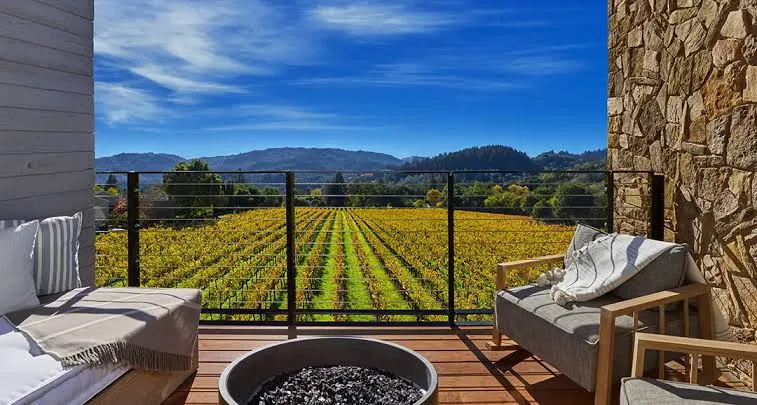
Scenario A: The Napa Harvest Estate
A couple books an estate suite in St. Helena for five nights during October harvest.
Environmental Context
Peak harvest season brings warm autumn days, cold nights, active grape picking, and heavy traffic along main valley routes.
Financial Decisions and Pitfalls
The travelers booked a suite listed at $3,500 per night ($17,500 base total). They assumed the location guaranteed quiet relaxation throughout daylight hours.
Operational Impacts
Early morning harvesting machinery operated near the suite terrace, generating ambient tractor noise starting at four in the morning.
Budget Adjustments
Future harvest season bookings require confirming that suite locations sit well away from active night-harvest vineyard blocks.
Subheading: Analyzing Scenario B: The Willamette Foothill Villa
Scenario B: The Willamette Foothill Villa
A couple books a hillside villa in Oregon for four nights in July.
Environmental Context
Early summer brings long daylight hours, mild temperatures, clear skies, and lush vineyard foliage across the valley floor.
Financial Decisions and Pitfalls
The travelers reserved a villa at $2,200 per night ($8,800 base total). They expected warm evenings suitable for outdoor pool dining.
Operational Impacts
Rapid evening temperature drops made outdoor dining chilly, requiring guests to move inside by early dusk.
Budget Adjustments
Pacific Northwest viticultural itineraries require planning for cooler evening temperatures and securing private local transit options early.
Planning, Cost, and Resource Dynamics
Structural Capital Allocation
Budgeting for premium wine country suites requires balancing baseline rates, mandatory resort charges, tasting fees, and private transit expenses.
Expense Distribution Metrics
| Expense Category | Typical Cost Share (%) | Average Price Multipliers | Operational Value Drivers |
| Base Suite Rate | 55% – 65% of budget | 1.0x baseline metric | Direct vineyard view, private terrace space |
| Mandatory Fees | 15% – 20% of base rate | 1.15x – 1.20x base rate | Resort surcharges, historic preservation fees |
| Tastings & Dining | 15% – 20% of budget | 1.15x – 1.20x activity | Reserve tastings, multi-course dining pairings |
| Private Transit | 10% – 15% of budget | 1.10x – 1.15x service | Dedicated driver services, airport transfers |
Tools, Strategies, and Support Systems
Systematic Verification Steps
Travelers can use concrete verification steps to audit viticultural properties before completing reservations.
Subheading: Essential Steps for Property Verification
-
Audit Parcel Maps: Confirm the suite directly faces vines rather than service roads or parking lots.
-
Verify Crush Pad Distance: Check distance from grape processing facilities to avoid harvest noise.
-
Calculate Total Surcharges: Add resort fees, valet parking, and local occupancy taxes to base rates.
-
Use Preferred Travel Networks: Book through luxury programs to secure property credits, breakfast, and room upgrades.
-
Evaluate Regional Transit: Arrange private driver services early, as ride-share options remain limited across rural valleys.
Risk Landscape and Failure Modes
Taxonomy of Estate Risks
Failing to evaluate property orientation, harvest schedules, and transit limits can result in noise disturbances, poor privacy, and high costs.
Governance, Maintenance, and Long-Term Adaptation
Subheading: Managing Vineyard Booking Timelines
Booking Cycles and Inventory Management
Top viticultural estates manage small room inventories, often providing fewer than twenty private cottages per property. High-demand harvest dates book months in advance.
Subheading: Pre-Booking Verification Checklist
Pre-Booking Checklist
Review these essential items before confirming reservations for top viticultural accommodations.
-
Verify the suite provides direct, unobstructed vineyard views.
-
Confirm room placement sits well away from public tasting room entrances.
-
Calculate total nightly costs, including all mandatory fees and local taxes.
-
Secure private local transportation for planned winery visits.
-
Confirm reserve tasting reservations at priority winemaking estates.
Measurement, Tracking, and Evaluation
Critical Evaluation Metrics
Evaluating viticultural accommodations requires tracking both quantitative room metrics and qualitative comfort signals.
Real-World Evaluation Examples
-
Example 1: Setback Assessment. A cottage situated two hundred feet inside vineyard rows provides greater acoustic privacy than a room bordering the main road.
-
Example 2: Surcharge Calculation. A $2,500 base rate carrying a $120 resort fee, $50 valet fee, and 14% tax results in a total daily cost of $3,020.
-
Example 3: Elevation Audit. A hillside suite elevated fifty feet above the valley floor captures broader views while avoiding ground-level pedestrian traffic.
Common Misconceptions and Oversimplifications
Subheading: Correcting Viticultural Booking Myths
Myth 1: Winery Suites Always Include Free Tastings
Many luxury estate hotels operate independently from adjacent wineries, requiring separate tasting fees and advance appointments.
Myth 2: Harvest Season Is Always the Best Time to Visit
Harvest brings active machinery, worker crews, heavy traffic, and peak room rates, which can disrupt quiet stays.
Myth 3: Ride-Share Services Are Readily Available in Wine Regions
Rural viticultural valleys often suffer from sparse driver coverage, leading to long wait times and missed tasting appointments.
Ethical, Practical, or Contextual Considerations
Agricultural Preservation and Sustainable Tourism
Booking luxury viticultural retreats requires balancing personal comfort with land stewardship. Fragile agricultural valleys face ongoing challenges regarding water usage, soil health, and traffic congestion.
Selecting properties that utilize sustainable farming, solar energy, and water recycling helps protect agricultural ecosystems. Supporting responsible estates ensures historic wine regions remain viable for future generations.
Conclusion
Selecting the best wine country honeymoon suites america requires evaluating vineyard setbacks, agricultural noise buffers, and total fee structures rather than relying on promotional names alone. Securing genuine luxury demands auditing parcel maps, room locations, and seasonal harvest schedules before confirming reservations. Balancing base rates with mandatory resort fees and private transit costs ensures high comfort and long-term value. Thorough research turns a viticultural stay into a peaceful, memorable, and restorative travel experience.